
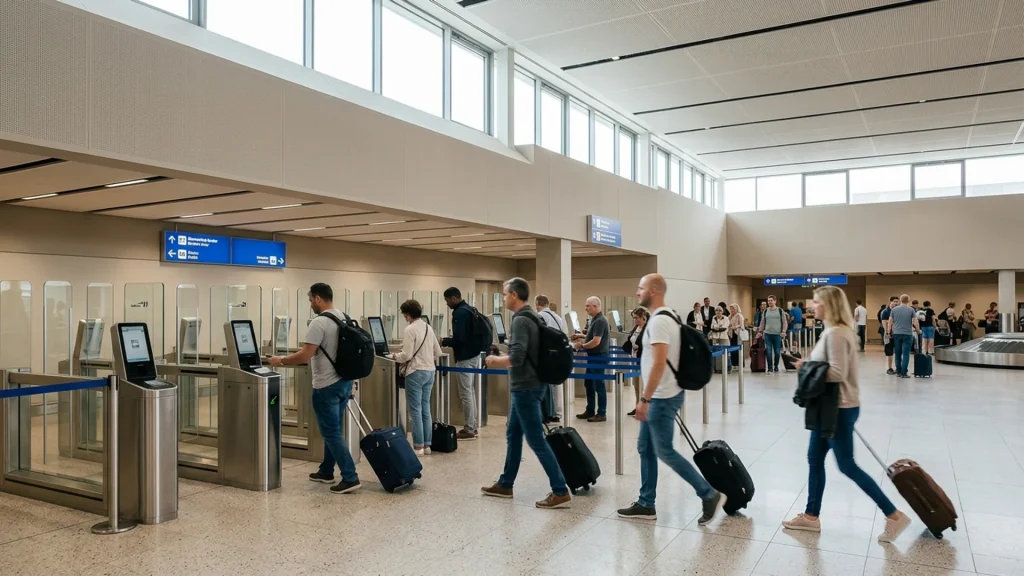
TL;DR
- EU airports can temporarily pause the new EES biometric registration if queues become unmanageable this summer.
- UK travellers have been warned of waits of up to 6 hours at peak times.
- Frontex confirmed the suspension option at an ABTA conference… described as a “last resort”.
- The flexibility ends in September, with no plans for further easing beyond the summer.
- The call sits with individual EU member states, not Frontex.
- Almost 90 million entries and exits have been registered since October 2025.
A Closer Look
The EU’s new Entry/Exit System (EES) has been the talk of the trade press all week, and there’s a fresh update worth flagging for your clients heading to the Schengen Area this summer. As The Independent reports, EU airports can temporarily pause the biometric registration step if queues become unmanageable… a contingency built into the regulation itself.
Speaking at an ABTA conference, Uku Särekanno, deputy executive director of Frontex, confirmed the suspension option is available as a last resort. “We have until the end of the summer the possibility during the tourism season to lift the biometric controls or the biometric registration temporarily,” he said. “If there is a peak hour, you see that there are hundreds of people queuing, their queues are getting too long, then member states still have the possibility to lift biometric registration.”
What’s Changed
The EES requires biometric information, fingerprints and a photo, on a traveller’s first entry into the Schengen Area. Delays have already been reported in Portugal, Spain and Italy following the initial rollout, with UK travellers warned of queues up to 6 hours at the busiest times. The good news is that once a client’s first enrolment is done, repeat trips within the retention period move through more quickly.
A European Commission spokesperson confirmed to The Independent that suspension is possible “at specific border crossing points and for a limited amount of time in cases of exceptional circumstances that lead to excessive waiting times.” The decision, importantly, rests with individual EU member states. Frontex’s role is supportive: training, guidance, and helping with staffing where it’s needed.
The Agent Angle
For agents, the helpful framing here is that the system has a release valve built in. Clients flying to Spain, Portugal, Italy or anywhere in the Schengen Area this summer may hit a longer-than-usual border wait, but airports also have the option to pause biometric registration at peak times if queues spiral. It’s the kind of context that helps clients arrive prepared rather than anxious.
Per The Independent, almost 90 million entries and exits have been registered since October 2025, with around 40,000 refusals of entry and roughly 1,000 people flagged as a security threat. Frontex has called biometric registration “probably the most challenging part” of the rollout, and noted the system could take up to two years to run smoothly. Member states are leaning on extra staffing, self-service kiosks and pre-registration tools to keep things moving.
For Client Chats
Good news? The story to share with clients is a calm one. Arrive at the airport a little earlier than usual, expect that the first Schengen trip will take longer at the border, and know that repeat trips speed up once enrolment is done. The suspension flexibility is there for the worst peak-hour moments, and it ends in September with no plans to extend. Agents who flag this gently at the booking stage save their clients a surprise at the gate.


